

Eventually, grief comes for us all.
Imagine for a moment, a life without grief. If you’re experiencing active grief right now, that might sound like it would be a blessing.
But a life without grief means no relationships that run deep enough to hurt when they’re gone… it means not being known, accepted and valued by people you care about… it means not having hobbies, work, or communities that you would miss if they became unavailable to you.
To avoid grief is to armor yourself against all the richness, love and purpose that life has to offer.
Obviously, that’s not ideal.
What is ideal is understanding grief well enough that you know how to deal with grief and loss without fear, so that you can move through it in healthy ways. This doesn’t mean you won’t feel the painful emotions of grief, but it does mean you’ll be able to see them as honoring the people and experiences that are most important to you.
Key Takeaways
- Grief is a normal, healthy process that occurs after a loss or a change in circumstances.
- Allowing yourself to fully feel your grief is the best way to progress through your grief and return to a more normalized emotional state.
- Journaling, therapy, and time with close family and friends or a supportive community can aid in healthy grieving.
- Building resilience in your daily life can make you better prepared to process grief when a loss happens.
What Causes Grief?
Broadly speaking, grief is associated with the loss of access. Access to a person you love, whether that’s due to death or separation. Access to employment. Access to experiences.
When we think of grief, we usually think of it as something that happens when someone we love dies. That’s the most understood form of grief. But people grieve all kinds of things.
A child goes away to college, and a parent grieves the loss of day-to-interactions.
You lose a job you love, and you grieve the loss of the possibilities that job represented.
Your favorite coffee shop closes, and you grieve at no longer being able to spend time in a place you enjoyed.
Grief happens when something you relied on, enjoyed, or cared about is no longer available to you. Being cut off from it causes pain in the form of grief.
Are you struggling to find ways to cope with grief? Talking to a therapist might help. You can book an appointment here.
Is Grief Healthy?

In a word, yes. Going through a grieving process in the face of any kind of loss is natural and healthy.
If you shut out the possibility of grief, then you’ll never allow yourself the opportunity to experience the great richness of relationships and the wonderful possibilities offered by all kinds of experiences.
Grief—especially the intense emotional suffering that happens after a loss—can feel terrible and overwhelming. But without the capacity to experience grief, we could never experience the fullness of life.
Healthy grieving has several aspects.
There’s the obvious emotional aspect. To be open to love, connection, and joy means to also be open to loss and sadness.
We are made to experience all emotions. I love what the movie Inside Out teaches about this: You need sadness just as much as you need joy. It’s okay and healthy to experience sadness at the loss of someone you love. It’s okay to be sad over changes in circumstances or the loss of possibilities.
Grief is how we honor the loss of things, and especially of people, that are important to us. Sadness and sorrow in the face of loss is the most natural thing in the world.
Grief has a spiritual aspect, as well. On a spiritual level, there’s life as we know it here and there is whatever comes after death. When we lose someone to death, it’s normal to worry and wonder what happens to that person after their passing.
For some, that can deepen their spiritual connection to the divine, which can be healing and allow you to feel hope even in the face of grief.
Grief can also be physical. You may experience a loss of appetite, sleep disruptions, and stomach upset, especially in the early stages of grieving. Like the intense emotions of grief, these physical symptoms will ease with time.
Grief is healthy in all these facets, but it’s also difficult… enough so that it may be tempting to avoid it. That’s when you’re at risk of crossing into unhealthy grieving and the negative impacts it can have on your health and relationships.
When you fight against feeling your grief, that’s when it gets overwhelming.
What Are the Best Ways to Cope with Grief When it Feels Overwhelming?
Feeling overwhelmed by grief in the days and weeks directly following a loss is normal. The feelings can be intense, even physical in nature. You might find yourself crying uncontrollably or feeling fatigued. For the first days and weeks after a loss, do your best to allow yourself to feel these things without judgement even though they’re uncomfortable.
Knowing that the intensity will fade with time can offer comfort and make it easier to give yourself over to your grief.
If, after a few weeks, you’re still feeling overwhelmed with grief, then it could be that you’re denying yourself the opportunity to actively grieve. This happens when we feel like we need to hold it together for the people around us. We put an expectation on our behavior and how people need to perceive us… and often in the process, we put a cap on what we allow ourselves to express in terms of emotion.
The solution to feeling overwhelmed by grief is often simply to give yourself permission to let yourself process the feelings you’re having.
That doesn’t mean you have to let those emotions take over at any given moment. But it does mean finding healthy ways to let them out.
A few ways to cope with grief so it’s more manageable:
- Let yourself weep. This may feel uncomfortable and there are situations or circumstances where you may want to hold that emotion back for a more convenient time, but that’s the key. You’re not suppressing your need to cry—you’re just delaying it until a time that works for you. When those sad emotions are bubbling under the surface, look for a time and space when you can safely let them bubble over… and by safely, I mean without feeling judged or rushed or like you’re making anyone else feel uncomfortable.
- Write a journal entry or a letter. Writing a journal entry about your feelings and about all the things you miss about the person or situation you’re grieving over can help you feel more regulated in your grief. You can also write a letter directly to your lost loved one sharing your grief with them. Telling your loved everything you miss about them and how life has changed with their absence can aid your healing.
- Therapy can help. A therapist gives you a place to say whatever is on your mind without expectation or judgement. It’s a place where you can be completely raw and vulnerable. You’re not there to meet anyone’s expectations or to fulfill a role for anyone… and that frees you to talk about all the things on your mind and in your heart.
- Be physically active. Grief can be very physical, so it makes sense that doing physical exercise that you enjoy or that feels like a release is another healthy way to move through your grief.
- Turn to a supportive community. Family, friends, a church group, or a support group that allows you to feel vulnerable and accepted can also help you heal and work through your grief.
If you need help dealing with an unexpected loss, our short-term trauma counseling services provide focused support to help you regain stability.
Everybody Grieves Differently, so How Do I Know if I’m Doing It Wrong
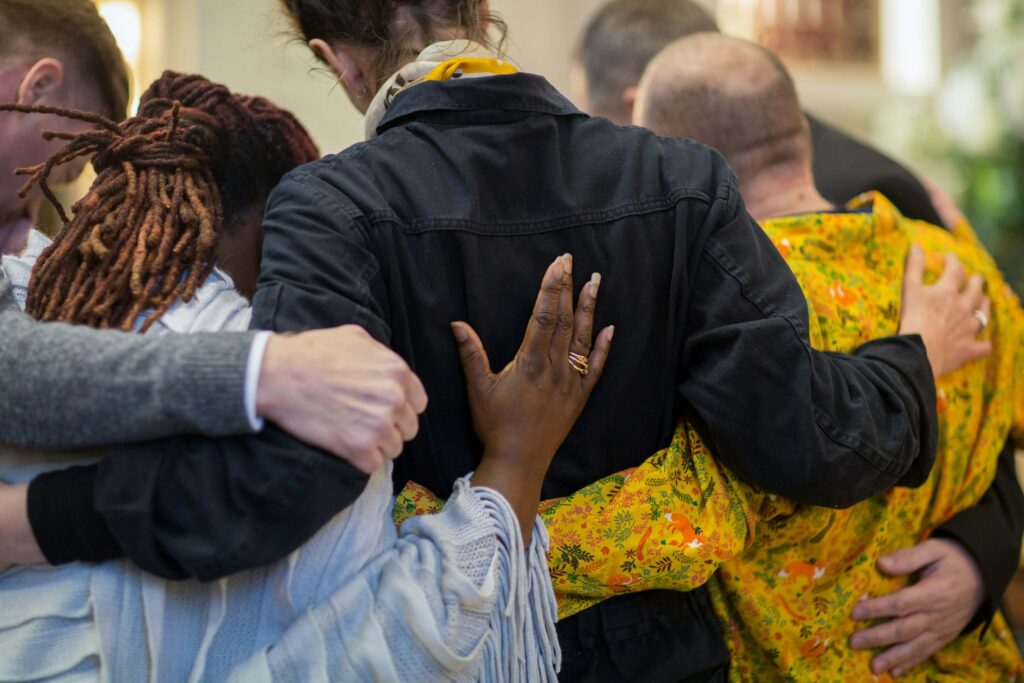
When you’re the one dealing with the loss of a loved one, it can be hard to discern if you’re approaching it in a healthy way, especially during the time of intense emotions directly following the loss. A few things indicate that your grief is progressing in a healthy way…
- The intensity and frequency of your grief emotions is lessening as the weeks pass.
- You feel able to talk about the person you lost and to share memories of them.
- You’re starting to adjust to the logistical changes brought on by the loss—you’re building new routines.
- You’re looking after your physical and emotional health and beginning to nurture your important relationships again.
- You’re actively seeking help from friends and family or from a professional therapist to work through your feelings.
If you’re supporting someone through their grief, it’s important you don’t project your own approach to grief onto them. What feels cathartic to one person may be completely unappealing to another. For example, one person may resist getting rid of any of their loved one’s things for some time after their passing. Another person may set to immediately cleaning and donating items after a loved one dies. Both can be healthy responses, though they look very different.
So how do you know if a grieving loved one is processing their grief in a healthy or a self-destructive way?
The first step is to be present. Spend time with your grieving loved one. Don’t try to fix things. Don’t feel like you need to say much. Simply be with them, witnessing their grief, and sharing that emotional space with them.
The second step is, from that place of empathy, to ask yourself if their actions are consistent with their personality. Does how they’re grieving make sense based on what you know of them?
For example, I like to collect coffee cups from places I’ve visited, and I hang onto almost every picture my daughter has ever drawn for me. If I were to suddenly decide, during grief, to throw those things away, it would be reasonable for a friend to say, “This doesn’t seem like you. Are you okay?”
So, if you’re supporting someone through grief, keep an eye out for things that seem out of character rather than thinking there’s any specific sign or tell that signals unhealthy grieving.
How Do Children Grieve Differently from Adults?
Children are more resilient than adults, and so sometimes their behavior during grief can seem strange to us.
If you think about how a child’s body physically responds to injury versus how an adult’s does, a child heals more quickly. The same is true of grief.
That doesn’t mean we don’t support a child through their grief, but we want to careful not to put extra interference on their healing process because it doesn’t look like how we, as an adult, would heal.
Often, it’s more important to keep an eye on you—the parent of a grieving child. There’s a temptation to take down the guardrails you’ve put in place in order to make grief easier for your child. You might be more relaxed about bedtimes or curfews. You might ask fewer questions about your teen’s evening plans.
It’s a natural response—you want to give them space to process their grief.
But you run the risk of letting them to turn to distraction and instant gratification to avoid facing the pain of their grief.
Keep your guardrails in place. Grieving children and adolescents still need structure and routine. They still need boundaries.
And they need an outlet for their grief. The most important thing you can do is create an environment that is safe for grieving and then step back and see how they respond.
Build Resilience Before the Hard Stuff Happens
I live near a fire station. Most days, the firetruck never leaves. But the firefighters train for when a call comes in. They keep their equipment in good repair, so they’re ready to respond.
You don’t want firefighters to build those systems on their way out to a call. You want that training already in place so they can mount an effective response.
The same is true for families.
The ease with which a family handles grief comes from developing trust, connection, and resilience on all your average days, so when the hard days come, you have that foundation to fall back on.
Ask yourself, “How do I build a steady life for me and my family?”
And, “How do we build resilience?”
Think about the skills you’ll need to deal with the hard stuff before it happens—healthy routines and habits and solid communication skills. Then you’ll be better able to come through the hard stuff okay and with all your relationships intact.
How Long Does the Grieving Process Take?
Depending on the nature of the loss, you can expect there to be a long, if not lifetime, interaction with your feelings of grief.
Over time, the frequency and intensity of your feelings will lessen.
But you can expect images, special dates, memories, and even certain smells to stir up feelings inside of you, even years after a loss. You reach a place where those triggers don’t cause an emotional breakdown, and you can see the feelings that rise up for what they really are…
Proof that you had a connection with that person—that they were worth something to you and you were worth something to them—and there was enough of a bond there that losing them comes with a cost… that’s a positive thing, not a negative one.
Soon after a loss, be prepared for emotional reactions to be frequent and to come at inconvenient times because you may not have a firm handle on your grief.
Allow yourself to feel the emotions that come with grief but strive to gain some self-control over how and when you feel them, so that you can process them in a healthy way.
Being able to do that comes with having access to a good support network and to a therapist you trust. Aim to give attention to your spiritual, emotional, and physical health throughout your life so that you’re resilient and prepared to deal with grief when it happens… because it does come for us all eventually.